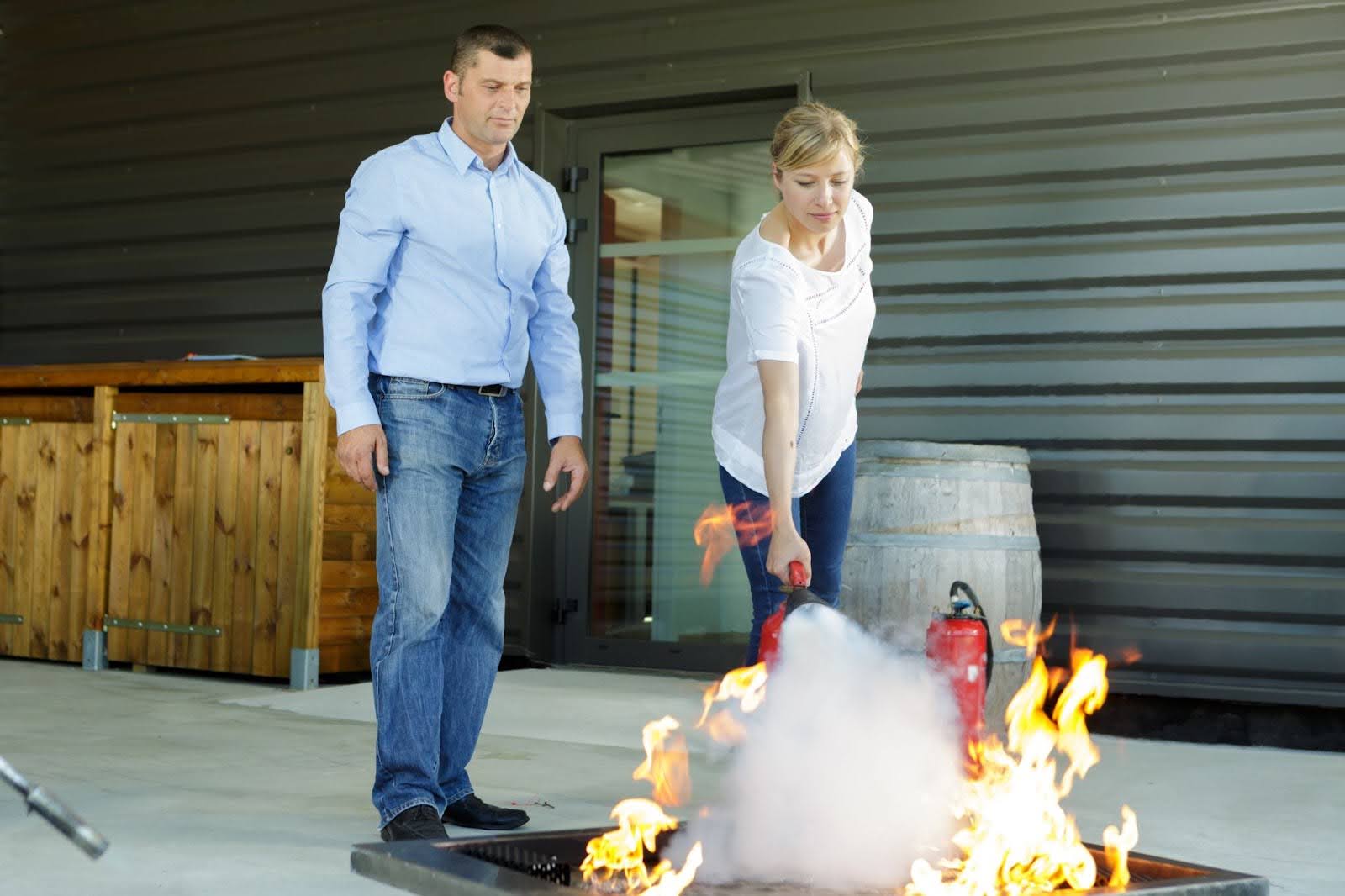
If a fire suddenly broke out, would you be prepared? While you may know that you need to remain calm and take action, many of us hesitate or freeze up when faced with an actual fire. At home, this could be a greasy pan catching alight on the stove. In the office, it might be an electrical fault in a power outlet or faulty appliance. In any scenario, those few seconds where you may not know what to do can be the difference between containing the fire, or watching it rapidly take over.
Knowing how to use a fire extinguisher starts with understanding what you’re dealing with. Not all fire extinguishers are suitable for all fire types, so it’s important to know which fire extinguisher class and colour band applies to your equipment. If you’re a business owner or facility manager, fire safety should be one of your top priorities. That means having the knowledge and appropriate equipment installed at key points around your building.
You might have a fire extinguisher in your kitchen or at work, but do you know how to use it properly? Or even worse, are you sure you have the correct type of extinguisher to deal with a fire? It’s easy to panic in an emergency situation, and not knowing what you’re doing can escalate a small fire very quickly.
Below, we provide a simple guide on how to operate a fire extinguisher. Known as PASS, it’s easy to remember and will help you put out that fire safely and as quickly as possible.
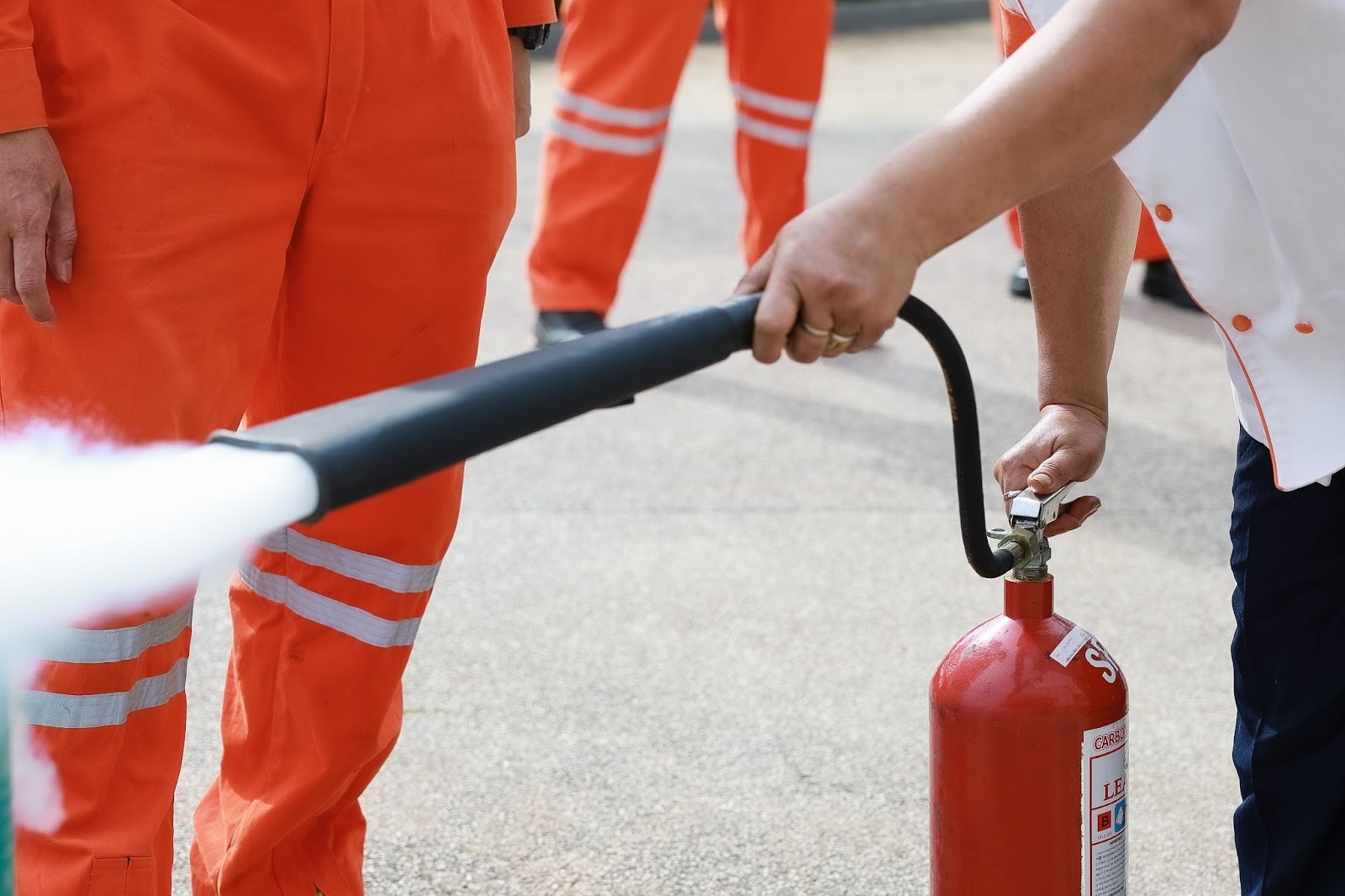
Fire extinguishers are excellent tools for controlling small fires before they develop further, but they’re not appropriate for every emergency. Recognising when not to use a fire extinguisher is just as important as knowing how to operate one.
If you don’t react quickly enough or try to extinguish a large fire, you put yourself and everyone else in danger. Fires can grow rapidly, and smoke can spread through a building in seconds. That’s why you should only use a fire extinguisher on small fires that have a clear source. This could include small electrical fires, bin fires or small kitchen fires. If used correctly an extinguisher can help you put the fire out quickly. As long as you’re confident in using the fire extinguisher, the fire is contained and you have a clear escape route behind you,of course.
However, if the fire is already producing large flames, smoke or is spreading across surfaces quickly, you should leave the building as soon as possible. Large fires can cause smoke and flames to spread quickly, trapping everyone inside. When this happens, your main concern should be evacuating the building as quickly and safely as possible. Ideally, your evacuation plan will be second nature; everyone will know where to go and what to do.
If you’re in charge of fire safety in your home or workplace, you should also be aware of your obligations under Australian fire safety standards. These help ensure that everybody inside a building can be kept safe in the event of a fire.
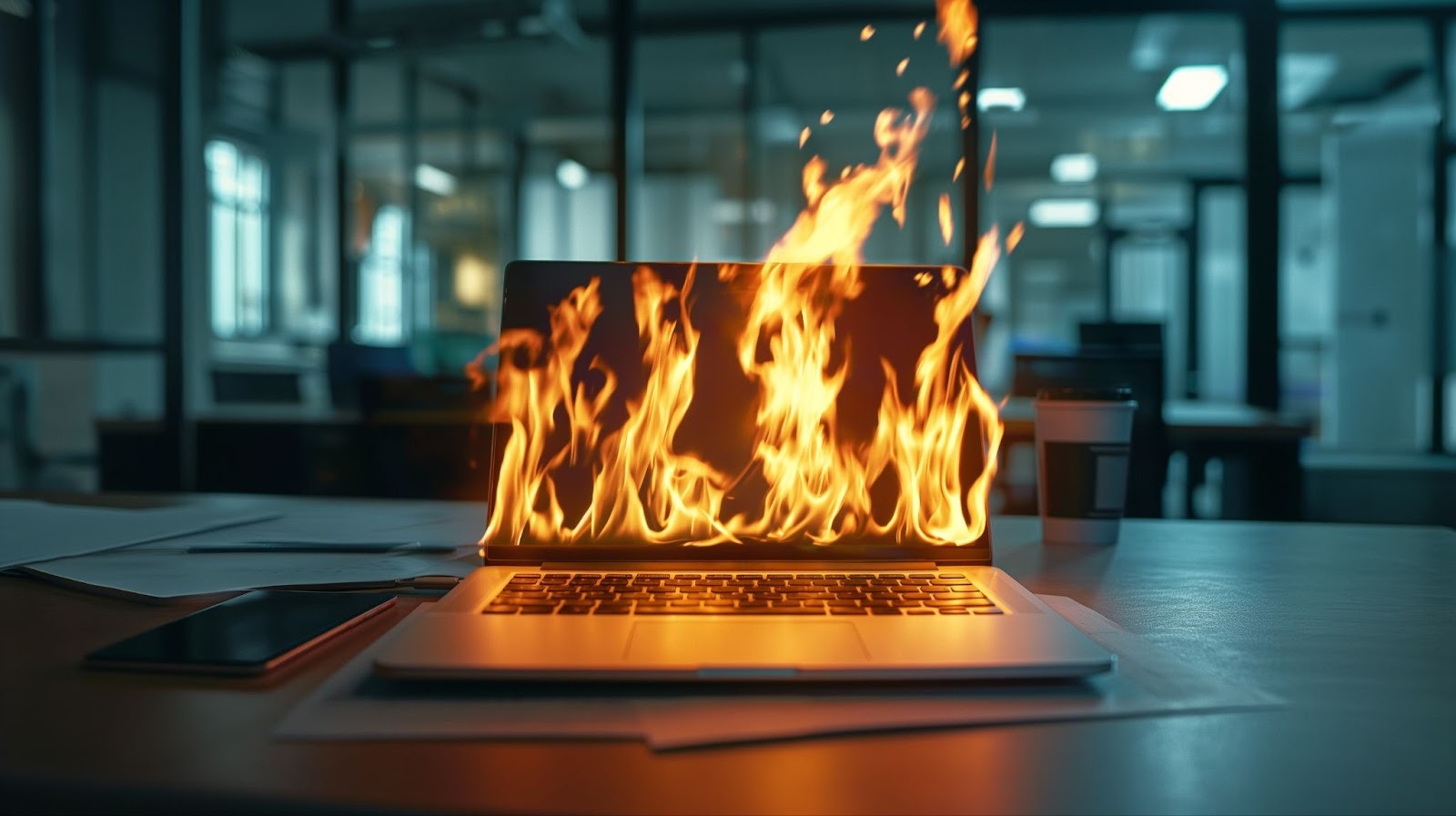
Fire extinguishers are amazing tools to have when facing a fire. However, there are some precautions you should take before grabbing your extinguisher and running towards the fire. Rushing into something that you don't know can actually cause more problems. Take a second to properly evaluate your situation so you know how to react and what you need to do to stay safe.
First thing to do is figure out what type of fire you are about to take on. There are many classifications for fires based on their fuel source. You will find fires made from electricity, flammable liquids, and ordinary combustibles. An extinguisher that is used on one type of fire may not work or create a bigger hazard on another type. Figuring out what you are dealing with will help you identify the risk.
Once you have identified the potential hazard. You should always ensure you have a clear path to exit the area. If the fire begins to spread or your investigation causes you to panic, you will want to make sure you can safely leave. Things like emergency exit lighting will help building occupants find their way to safety when visibility is low. You should also never let the fire block your path to exit.
Lastly, make sure to notify those around you of the fire and activate the fire alarm system. The sooner everyone knows there is a fire, the sooner they can begin evacuation and the fire department can be alerted.
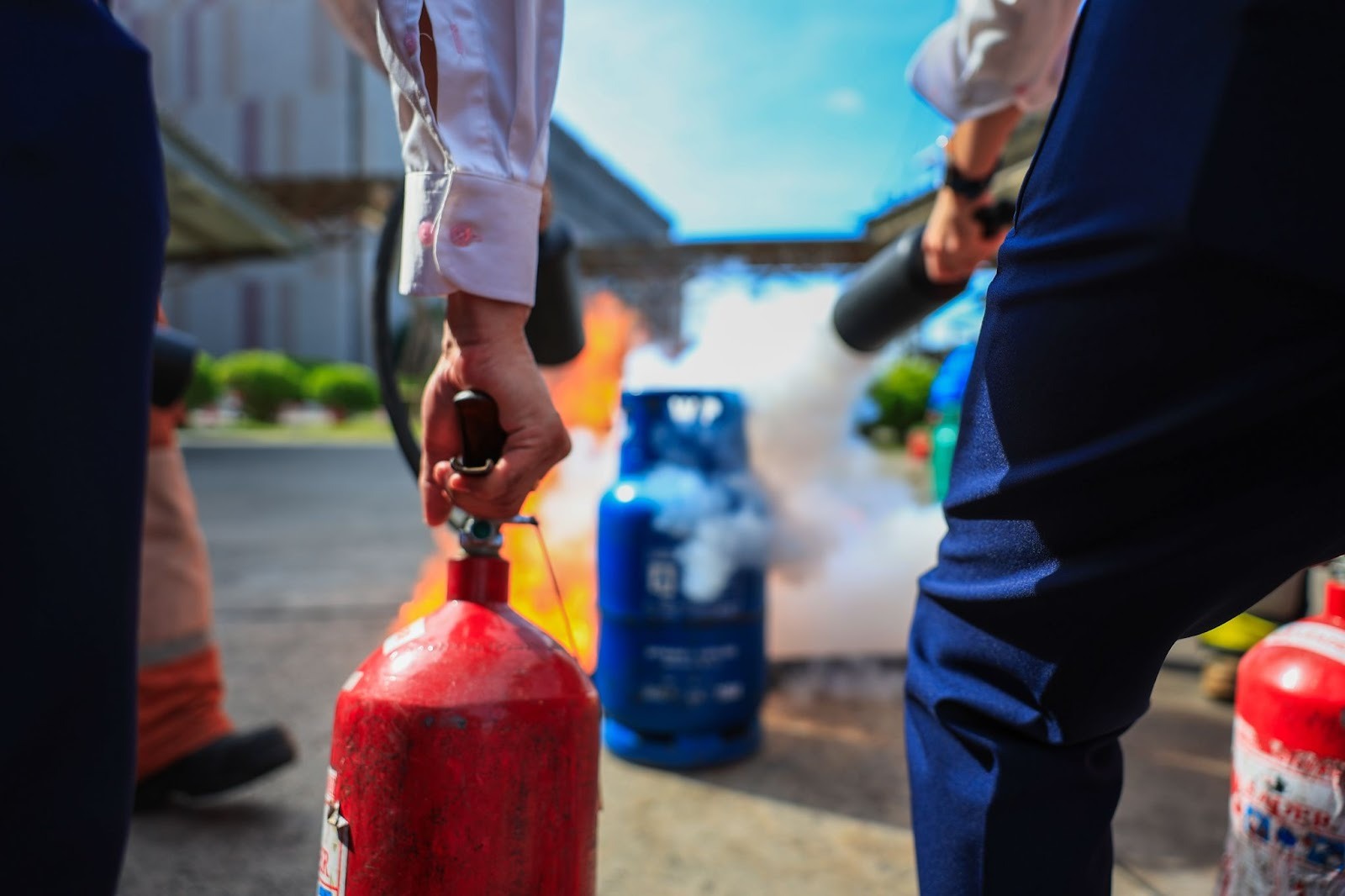
PASS stands for Pull, Aim, Squeeze, Sweep. It represents the standard procedure used to operate most portable fire extinguishers. Because it is commonly taught in the workplace it also complies with Australian training requirements for fire safety at work. When PASS is used with extinguishers compliant with AS 1851, you can expect it to work effectively on fires that are just starting.
Learning how to use a fire extinguisher using the PASS system is important if you're responsible for fire safety at work or in a commercial area.
The first step is to pull the pin at the top of the fire extinguisher handle. There is a breakable tamper seal attached to the handle that will show if the extinguisher has been previously used or if the pin has been pulled. Pulling the pin releases the fire extinguisher's operating lever and allows you to discharge the extinguishing agent.
Before you pull the pin, make sure you are standing upright with the extinguisher and that you are standing 2 to 3 metres away from the fire or further depending on size of fire and type of extinguisher.
Point the extinguisher nozzle (or hose) at the base of the fire. You want to aim at the fuel source which will most always be at the bottom of the fire. Think about fire behaviour here. In order to extinguish a fire you must remove the heat, oxygen or fuel source. By aiming at the flames, you are not completely extinguishing the fire. To truly extinguish it, you must aim at the base of the fire.
Next you want to squeeze the handle of the extinguisher. This will discharge the extinguishing agent whether it be carbon dioxide (CO2) or dry chemical. Do not pump the handle like a spray bottle. Instead, keep consistent pressure on the handle until the extinguisher has been emptied or the fire has been extinguished. Most fire extinguishers only last around 10 seconds, so be conscious of your discharge time.
Continue to squeeze the handle and sweep the extinguisher from side to side at the base of the fire until it appears to be out. Watch the area in case it reignites and repeat if necessary. If you can't extinguish the fire quickly, get away from the fire and evacuate the area.
Using the correct equipment and having some familiarity with how to use a fire extinguisher are both great first steps. When facing an active fire, even someone who’s well prepared can find that panic and adrenaline cause them to make silly mistakes. Not only can these mistakes decrease your chances of extinguishing the fire, but they can also put you in more danger.
Additionally, putting water on an electrical fire will likely cause the fire to spread. Using water on grease will do the same, and shooting foam into an ethanol fire will simply disperse it. Fires are complicated and require specific types of training/extinguishers to bring under control. Employers are responsible for having the proper fire safety equipment for their workspace and ensuring all outlets are clearly labelled and accessible.
Not standing at the proper distance. If you get too close to the fire, you could harm yourself with the fire’s heat or smoke or even a flashover. Staying too far away might also cause your efforts to be ineffective if you’re beyond the effective range of the extinguisher. Fire extinguishers are designed to be used from certain distances based on the type. This allows the extinguishing agent to cover the most area while maintaining the right amount of pressure.
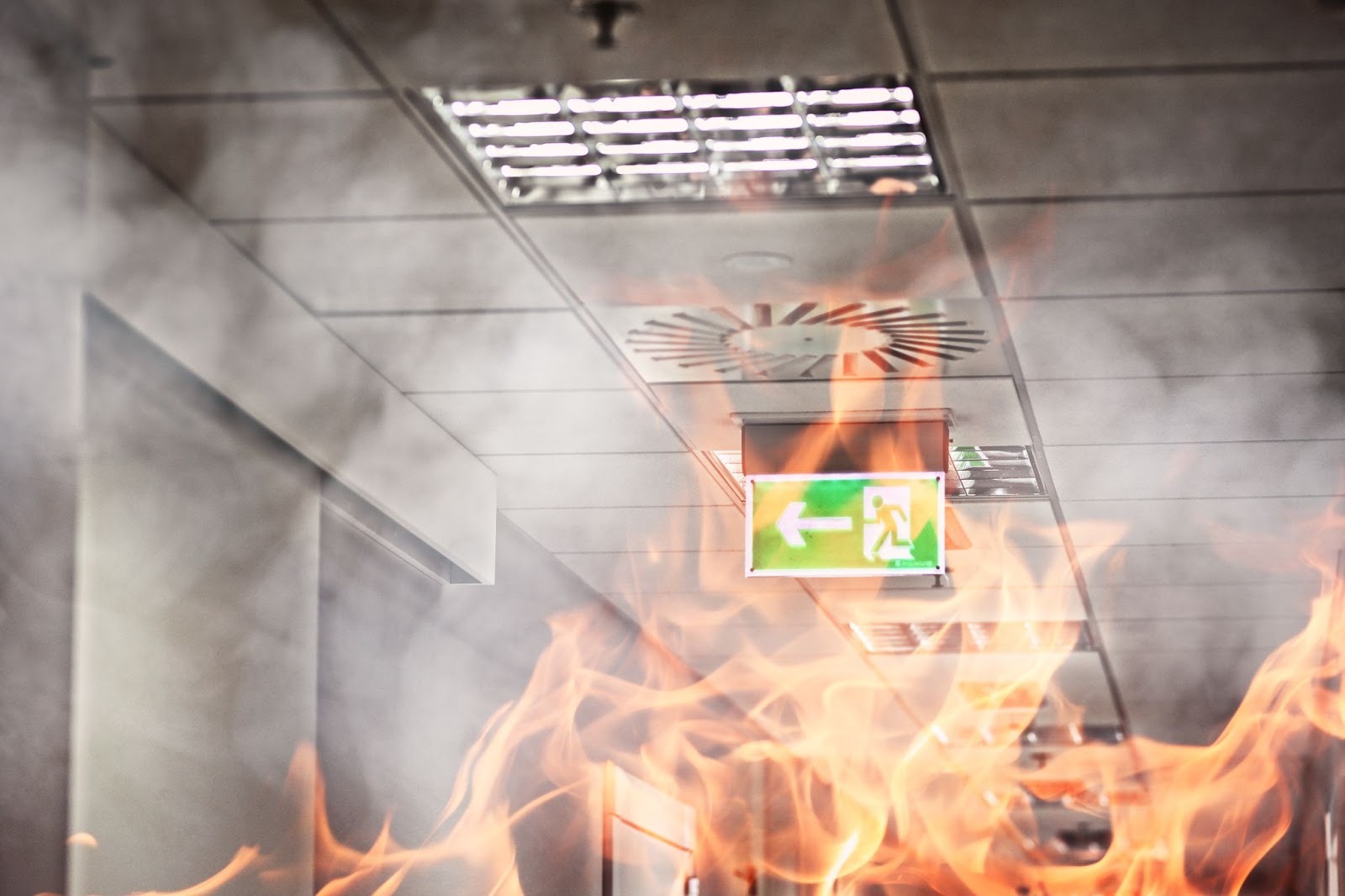
Knowing when not to act is as important as knowing how to react. Fighting a fire that is already out of control will put you at risk and also hinder the ability of the fire services to do their job.
Only approach a fire if it is small, contained and does not give off too much heat or smoke. If the fire has spread from the object of origin and is either reaching the ceiling or producing large amounts of thick dark smoke then the fire is most likely too large for a portable fire extinguisher.
Other indicators include rapid rates of growth, multiple fires or smoke impairing your vision. Don't let your equipment limit your decisions if you are confronted with these scenarios. For instance, even though using a fire hose reel can feed you a constant supply of water to fight certain fires it can only be used successfully under the right circumstances and should never be used when unsafe or if you suspect the fire is electrical.
If the fire is not easily controlled or extinguished, evacuation becomes the priority. Warn others on your way out. Trigger the fire alarm system if it hasn't already activated. Proceed immediately to safety following established emergency procedures.
Don't allow yourself to be trapped in fighting a fire. If you don't have a clear path of retreat, the proper equipment and extinguisher, or backup assistance readily available, it's time to exit the area. Fire departments have the tools and training to take care of larger fires. Your responsibility is to ensure everyone escapes safely and that firefighters can reach the emergency without obstacles.
It's vital that every employee knows how and when to react to a fire, as well as when not to. Fires can spread quickly, think and act responsibly.
Putting out a fire should always be your first concern. However, your actions following an incident can be just as crucial to mitigating risk, maintaining safety, and staying compliant. Even if a fire seems to be completely out, there are important steps to take after using your fire extinguisher.
Firstly, watch for re-ignition. Fires can often restart if fuel, heat, or electrical sources are still available. This is especially common in confined areas or around machinery. Always stay a safe distance away from the extinguished fire, and watch for smoke, heat, or flare-ups. You may need to hit the fire with additional suppression — whether that means another burst from the extinguisher or, if appropriate, using a fire blanket to smother any residual heat and keep oxygen from fueling the fire further.
When you’re confident the fire is out and won’t reignite, be sure to report the incident and take the used extinguisher out of service. Even if your extinguisher was only partially discharged, it should never be left in an area where a fire has occurred until it can be professionally inspected, refilled, and put back in working order. A used or damaged extinguisher can do more harm than good, providing a false sense of readiness should another fire break out.
Routine fire equipment maintenance is the best way to make sure all of your extinguishers are fully charged, up to code, and working properly. Maintaining your equipment also allows you to confirm that you have the right fire suppression tools for your environment and give your employees additional fire safety training if necessary.
Alexon will help you make sure equipment is serviced, risks are identified, and procedures are reinforced so you can get back to work knowing your workplace is as safe as it can be.

PASS won’t do you much good if you haven’t taken steps to ensure you have the correct fire extinguishers installed, that they are serviced regularly and that all people on site know what to do in the event of an emergency. PASS is a method that is easy to remember and reliable when you need it but in order for it to work, you need to take the correct preparation, training and compliance seriously.
How often do you think about the expiry date of your fire extinguishers? They can lose pressure, valves can become weak and the extinguishing agents can deteriorate as your extinguisher gets older. If they aren’t regularly serviced and replaced on a timely basis, your perfectly accessible extinguisher may not work when you need it to.
That’s where Alexon can help you. Not only can we help you select the right fire extinguishers for your site and install them in the correct location but we can also regularly test and service them to ensure your site remains compliant and protected according to Australian Standards.
We don’t just supply equipment, we make sure it’s ready to perform when it matters most.
Fire extinguishers can only work for you when they’re fully charged and ready to use at a second’s notice. Regular servicing ensures your equipment is compliant, reliable, and performing when you need it to.
Alexon offers professional fire extinguisher maintenance to ensure your systems are compliant with Australian standards and your workplace is completely protected. We perform routine inspections, testing, and replacements to ensure each unit is performing exactly how it should.
Give yourself the best chance against fire by booking fire extinguisher maintenance with Alexon today. Contact us now and speak to our team for advice or to book your service.
Complete the form to request a call
from a friendly Alexon team member.


