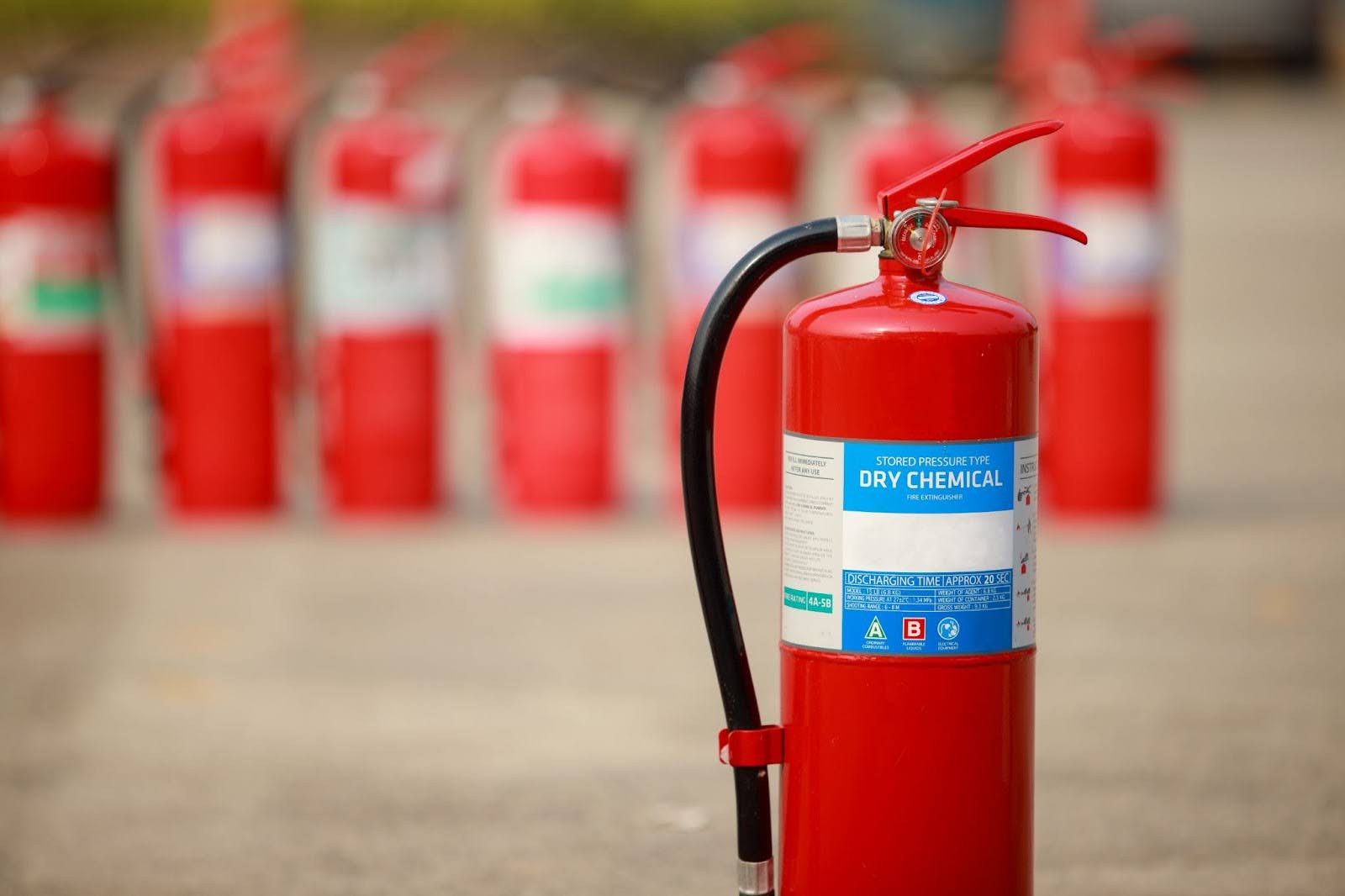
Words like dry chemical and dry powder are often used interchangeably when discussing fire extinguishers. They appear to be the same thing throughout specification documents, site signage and even compliance conversations. But using them interchangeably can lead to misconceptions about the suitability of an extinguisher for a particular application, what classes of fire it can be used on and its limitations.
When it comes to compliance in managed sites, not understanding the difference can leave you exposed. Especially if you are selecting, installing or auditing fire extinguishers without knowing exactly what agent is in them. As a building owner, facility manager or compliance professional, getting fire extinguisher terminology wrong can lead to faulty installations, ineffective fire response and liability during audits or after an incident has occurred.
But this doesn’t just pose a paperwork risk. Using the wrong extinguisher type can put people at risk, damage assets and hinder your fire protection efforts. We see it all the time at Alexon. Sites that have installed dry chemical extinguishers thinking they are covering a risk when they should have been using dry powder extinguishers, or vice versa.
Specifying the right fire extinguisher starts with installation. Fire extinguishers should be selected, located and commissioned based on the risks found during a fire risk assessment and installed according to Australian Fire Safety Standards, as well as the National Construction Code.
In this article we outline the differences between dry chemical and dry powder fire extinguishers. How the terms are used throughout the fire protection industry in Australia and why it matters when you come to specifying, installing and auditing your fire extinguishers.
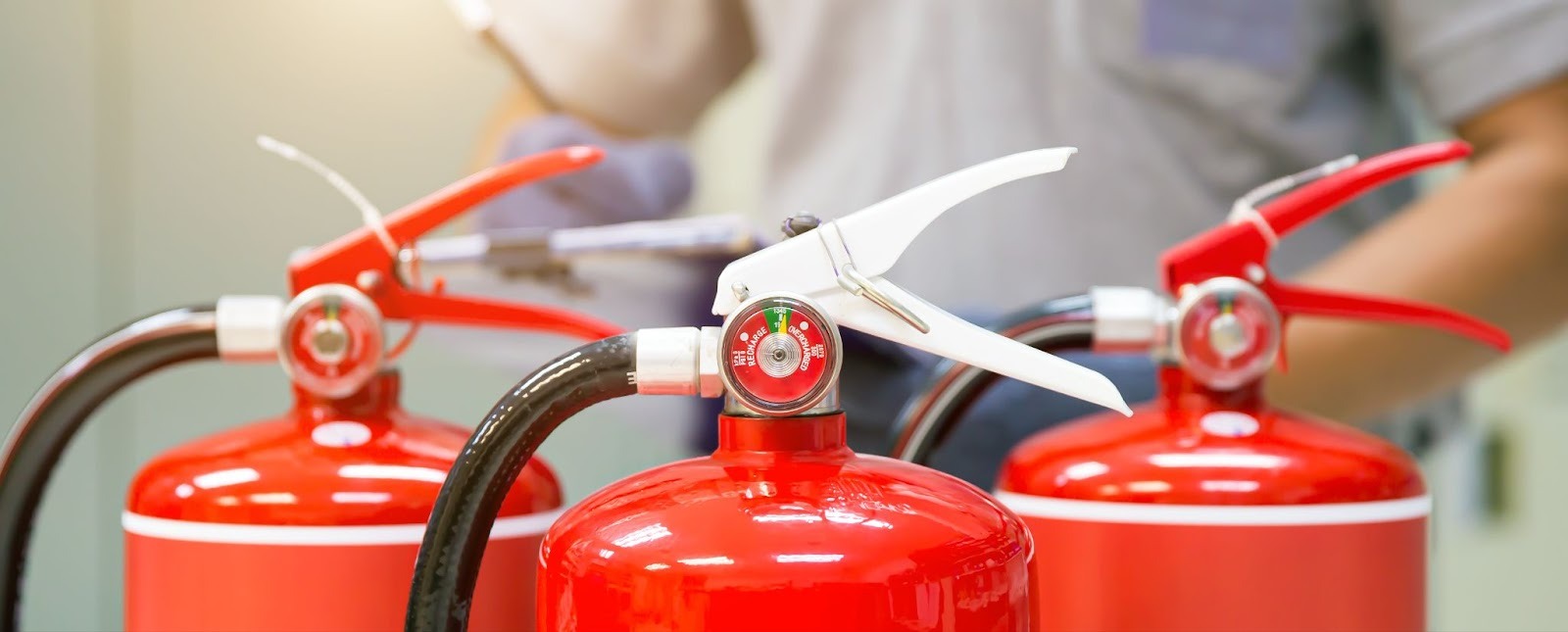
The classes, types and sizes of fire extinguishers required for different fire risks depends on a range of factors. However, too often fire extinguishers are specified generically, without thought being put into the risks present or the operational limitations of the device. This results in ineffective fire suppression when these extinguishers are required for fire control.
Different fire extinguisher types have been developed to suit different types of fire risks. They vary by fire extinguishing agent and fire suppression method used. This results in each fire extinguisher type operating differently when discharged. Each also presents unique hazards to both the operator and those nearby when discharged. For these reasons not all fire extinguisher types can be used on all fire risks, even if they have an appropriate fire class rating.
For fire risks which involve tightly defined fuel, environmental and occupancy conditions installing the wrong type of fire extinguisher could make the fire worse. Extinguishing agents may spread combustible material and burning foam, obscure visibility or leave a residue which damages electronic equipment. In some cases discharge will present additional hazards to occupants such as conducting electricity or displacing oxygen.
Discharge of the incorrect fire extinguisher type is commonly discovered during incident investigations or audit processes. This occurs long after the incorrect equipment has been installed.
In Australia ‘dry chemical’ and ‘dry powder’ are both terms used to describe a fire extinguisher type. Both terms are also used interchangeably within the industry despite having distinct meanings in Australian Standards. By understanding how these terms are defined in the Australian Standards you can be sure to specify the correct type of fire extinguisher for your fire risks.
Dry chemical fire extinguishers are hand-held fire extinguishers that discharge a pressurised powdered chemical. Most dry chemical extinguishers extinguish fire through separation of the fuel from the chain reaction that takes place at the flame surface. This distinguishes it from other extinguishing media such as water or gas, where cooling and oxygen displacement play a more significant role. Dry chemical extinguishers are most effective on quickly spreading fires that require fast knockdown.
The extinguishing agent separates the fuel from the chemical chain reaction in the flame front by discharging a cloud of fire-suppressing powder. Provided sufficient quantity of agent is applied, the fire will be controlled quickly. Dry chemical agents are electrically non-conductive which allows them to be safely discharged on some types of energised electrical fire risks.
Monoammonium phosphate and sodium bicarbonate are the two main types of dry chemical agents widely specified within Australia. Due to varying agent formulations having unique discharge and burning surface characteristics they are often incorrectly substituted for one another. The term "dry chemical" is just a label for the extinguishing agent, and doesn't guarantee equal performance on every kind of fire. Agent residuals also vary greatly which can influence installation location.
Dry chemical extinguishers are generally accepted to be effective against Class A solid combustibles and Class B flammable liquid fires, as well as offering a degree of protection on energised electrical apparatus. For this reason they can be found installed throughout a range of commercial and industrial premises as part of an overall fire safety strategy that may include various other different types of fire safety equipment. However dry chemical extinguishers should never be seen as a one-size-fits-all solution and should always be reviewed as part of a complete fire safety package when considering fire protection.
Dry chemical extinguishers are not considered to be all the same. In Australian fire protection practice, they can be distinguished by the fire class rating and agent they contain, as well as applications/environment they have been tested and approved for. The most appropriate classification system for extinguishers is defined by AS1841 which details performance testing, labelling and rating requirements of extinguishers to match the appropriate identified risks.
The following sections outline the two primary classifications of dry chemical extinguishers used in Australian commercial and industrial settings.
ABC dry chemical fire extinguishers are rated for Class A, Class B and Class E fires. This makes them one of the most common forms of dry chemical extinguishers specified throughout Australia’s commercial and industrial sector. The major benefit of an ABC extinguisher is its ability to be used on fires involving solid fuels as well as flammable liquids and energised electrical equipment.
ABC dry chemical extinguishers can be found in many areas of a workplace due to the added benefit of the Class A rating. They are often found in general storage areas, workbenches or other areas where there is some amount of solid fuel present along with electrical equipment or flammable liquids. When specifying fire extinguishers, ABC units are often a good choice for general coverage if their limitations are taken into consideration.
ABC dry chemical extinguishers are often used to meet the requirement for fire extinguisher coverage in areas with mixed fire risks. Keep in mind that just because an extinguisher is classified for multiple fire classes does not necessarily mean it can or should be used anywhere within the building. While it would likely be acceptable from a fire class perspective, using an ABC extinguisher may introduce concerns regarding damage to equipment from residue, reduced visibility during discharge or the need for cleanup after discharge.
We typically recommend using ABC extinguishers as part of a layered fire protection plan that incorporates correct placement, proper identification and supplementation with other types of fire extinguishers when the risk profile calls for it.
BC dry chemical fire extinguishers are only rated for Class B and Class E fires. This means they do not have a Class A rating and should not be used on fires involving solid fuels.
Dry chemical extinguishers that are rated BC are less common than ABC dry chemical extinguishers. This is because they can only be used on fires involving flammable liquids and energised electrical equipment. As such, they are usually only found in areas that do not have any significant amounts of Class A fuels.
Installing a BC dry chemical extinguisher in an area with Class A fire risks would not be compliant. Just as it would be wrong to install an ABC extinguisher in a location that has no risk of Class A fires, you cannot install a BC extinguisher in an area that needs protection from fires involving solid combustibles.
BC rated dry chemical extinguishers can be used as part of a compliant solution. They should never be used in place of an ABC dry chemical extinguisher without first reassessing the fire risks within the area.
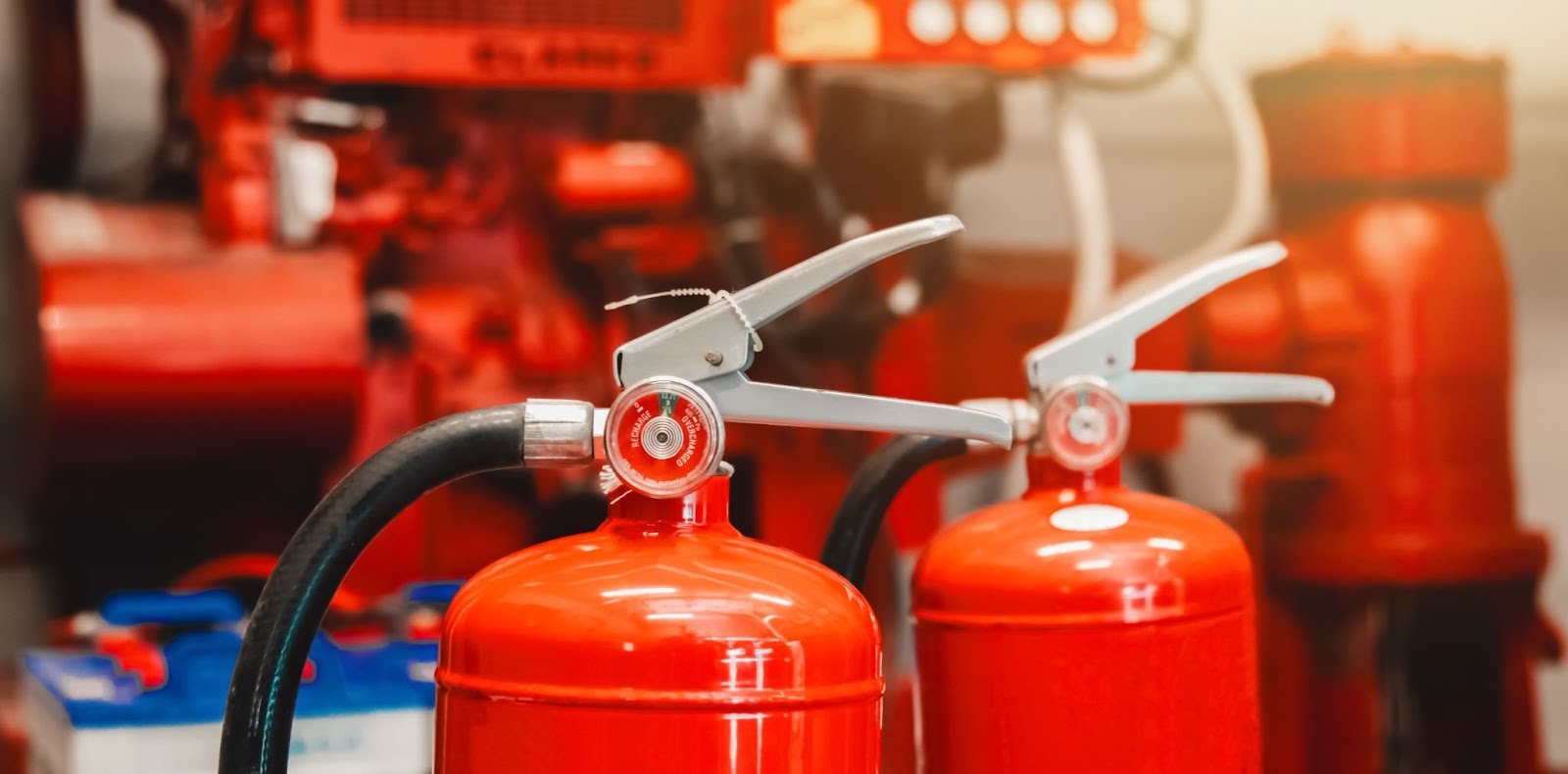
Strictly speaking, a dry powder extinguisher is actually not a multi-purpose extinguisher at all but rather an extinguisher filled with a special powder for use on a specific fuel risk rather than “ordinary” combustibles. Dry powder typically references the use of powders on specific hazards including metals.
Chemically speaking, dry powder extinguishing agents do not resemble traditional monoammonium phosphate or sodium bicarbonate-based dry chemicals. Instead, these powders are designed to withstand high heat levels upon application to a fire involving metal and to form a crust or heat sink when applied to the fuel’s surface. The agent itself works by excluding oxygen from the fuel source and absorbing heat without undergoing any unwanted chemical reactions with the fuel.
As such, reactive materials such as magnesium, sodium, potassium, and certain aluminium alloys will typically require a specialised dry powder extinguishing agent should a fire occur. Using a traditional dry chemical extinguisher on, say, a combustible metal fire could result in little to no effectiveness from the extinguisher. Dry powder extinguishers that are rated for use on flammable metals will have “Class D” on the label identifying the extinguisher’s suitable use per Australian standards.
Dry powder fire extinguishers are recommended for use on fire classes that involve combustible metals and other specific hazards that benefit from a non-reactive, powder-based extinguishing agent. They are not considered multi-purpose and should only be used for their intended, labelled purposes. Furthermore, dry powder extinguishers should only be installed if a fire risk assessment has identified the presence of materials that warrant their use.
The most common use for dry powder fire extinguishers is in commercial facilities or areas that work with combustible metals. This includes shops that cut or fabricate metal, facilities where metals are used to produce waste by-products, and industrial areas where chemicals or mining occur.
Fires involving metals are unpredictable when compared to fires involving solid or liquid fuels. They can produce much higher temperatures than a typical fire and can behave erratically when water is applied. Some metal fires can even burn underwater or in low-oxygen conditions. If the wrong type of fire extinguisher is used during a metal fire, it can cause the fire to spread or expel burning materials beyond the original fire area.
This is why dry powder extinguishers are used almost exclusively for Class D-rated fire hazards and are not to be substituted with ABC rated dry chemical or BC rated dry chemical fire extinguishers. Dry powder fire extinguishers are usually only found close to the area of the process they are intended for and should only be used by personnel who have received proper training on how to use them.
Knowing where these extinguishers are located and how they differ from your standard dry chemical fire extinguisher can help keep your facility up to code and ready for any kind of fire.
This table provides a clear reference for professionals when specifying fire extinguisher types, integrating operational, environmental and compliance considerations.
Understanding these distinctions is critical for both effective fire protection and adherence to Australian Standards, and ensures that fire extinguisher testing and maintenance programs are appropriately targeted.
The selection of fire extinguisher types should be directly aligned with the specific hazards present in each environment. Beyond simply matching fire class ratings, understanding the operational context, occupancy patterns and environmental conditions is essential for effective first-response fire protection.
The major fuel loads within residential or office buildings are likely to be combustible solids, small electrical appliances and limited amounts of flammable liquids. ABC dry chemical fire extinguishers are often used to provide general coverage in these occupancies.
Advantages of choosing dry chemicals include quick knockdown of most office fires and the ability to meet both AS1841 and AS2444 spacing requirements. Factors which should also be considered include accessibility to all building occupants and adverse reactions to the extinguishing powder on office equipment.
Fuel loads within kitchens consist primarily of cooking oils/fats. Fires involving cooking media are classified as Class F fires and require a wet chemical fire extinguisher for control. However, there may be reason to install dry chemical fire extinguishers nearby for general-purpose coverage. Ensure they are installed in a location that does not interfere with kitchen activity and/or obstruct movement of staff. Other factors which should be considered include ventilation, signage and exposure of building occupants to the extinguishing powder.
Fuel loads within industrial or manufacturing plants can vary greatly from one facility to another. Common hazards include flammable liquids, combustible solids, electrical equipment, and reactive chemicals. Many facilities install ABC, BC and special dry powder extinguishers to provide coverage of these hazards.
When choosing a location for an extinguisher, take into consideration the process design, equipment spacing, employee travel distance and access to the extinguisher, as well as how the extinguisher may affect the activation of automatic fire protection equipment. Risk assessments should also be able to identify the appropriate mounting height for the extinguisher as well as travel distances to reach the extinguisher.
Wind, dust and rain are common factors which must be considered when placing extinguishers outdoors. Dry chemical fire extinguishers that are placed outside should be located in a cabinet or enclosure to meet current compliance requirements and ensure they are ready to use when needed. ABC or BC dry chemical extinguishers are commonly placed in cabinets for general fire protection.
Areas with high fire risks such as fuel depots or rooms containing metals or chemicals may require Class D dry powder extinguishers. When installing fire extinguishers in these areas, make sure they are visible and can be accessed easily.
As there are many factors that come into play when choosing fire extinguishers it’s important to know more than just the class rating of the fire. Knowing your processes and environment including your occupancy, travel distance to exits, equipment sensitivity and interaction with other fire protection systems is important when protecting lives and assets. Compliance obligations also need to be considered when selecting fire extinguishers.
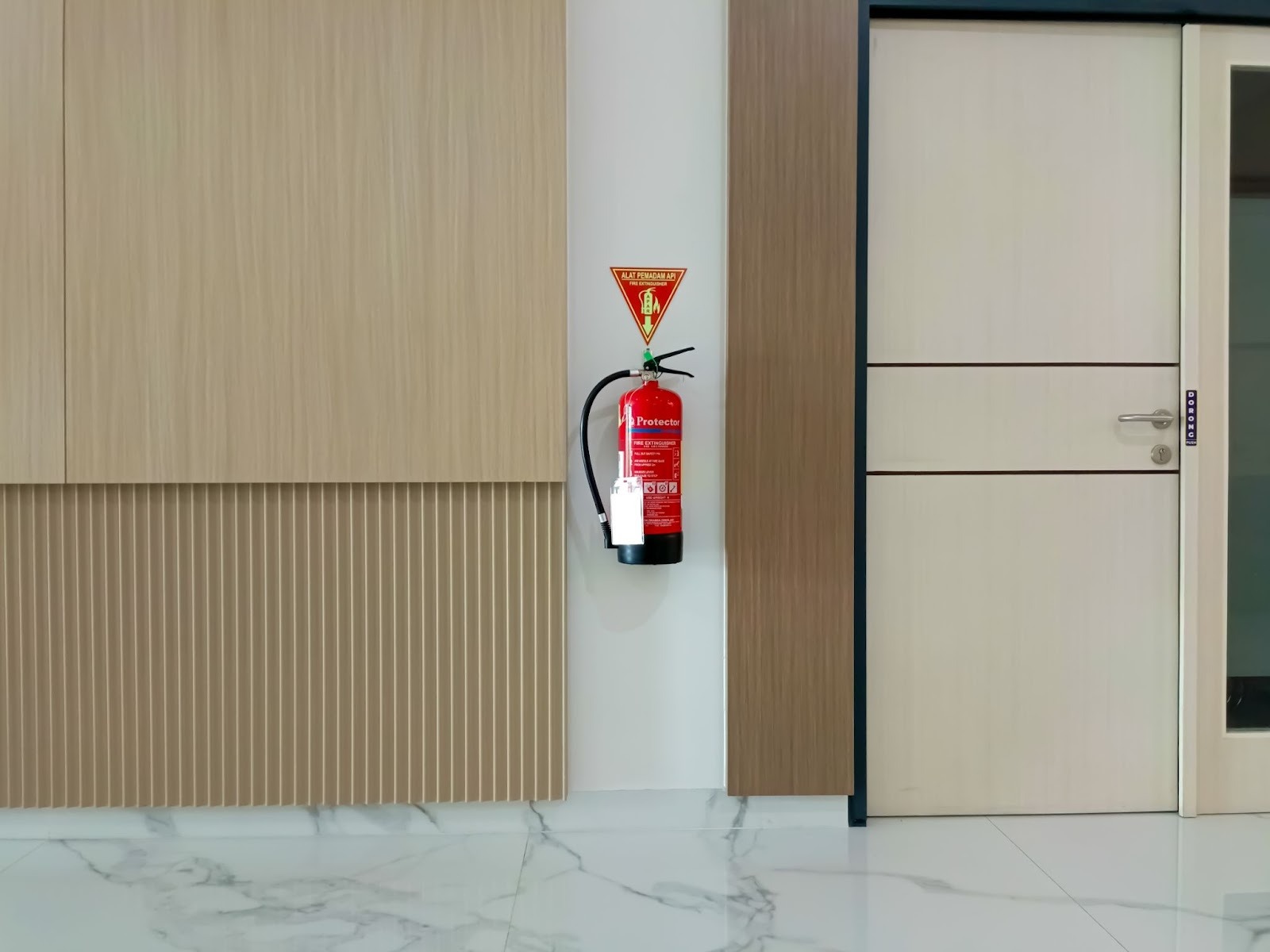
Ensuring compliance with AS1851 Standard will require that extinguishers are located based on travel distances, mounted at the correct height and have correct signage placed nearby. They also need to be visually inspected, tested and serviced on a regular basis. Ensuring you select the right extinguisher for the process also makes life easier when it comes to maintaining your fire safety equipment and you’re able to stay compliant. Record keeping is also a big part of an operational fire extinguisher management system.
Some other things to consider are completely dependent on your environment. Will your extinguishers be located in an area that receives extreme hot or cold temperatures, will they be exposed to high levels of humidity or sunlight if outdoor locations? How long will your fire extinguisher last? Some dry chemical extinguishers don’t handle prolonged exposure to moisture well and dry powder extinguishers should not be subjected to any foreign substances or accidental discharges.
There is a lot to consider when selecting fire extinguishers but as long as you know your fire risk, environment and compliance requirements you’ll be able to choose the right extinguisher.
At Alexon we can help you choose the right fire extinguisher based on performance of different extinguisher types and your compliance needs so you know they’ll operate effectively if ever needed.
Selecting the appropriate fire extinguisher goes beyond just meeting safety regulations — it's an essential component of an effective fire protection plan. Knowing the differences between dry chemical vs dry powder extinguishers, understanding their benefits and limitations, and choosing the right option for your specific environment can mean the difference between containing a fire risk and putting people, property and business operations at risk.
When developing a fire safety plan, it's important to evaluate the hazards that you face, take into account occupancy and operational considerations, and ensure that extinguishers are part of an overall emergency preparedness plan. This means proper placement and signage, and compliance with AS1851 Standard regarding inspection, testing and maintenance.
By taking the time to plan ahead you can help avoid confusion during an emergency and reduce the risk of creating additional hazards through incorrect use of an extinguisher. You'll also be set up for sustained compliance.
Here at Alexon, we can help you understand the differences between fire extinguisher types and work with you to select, install and maintain the right fire extinguishers for the specific risks at your facility. We'll make sure your fire protection plan is up-to-date, compliant, and fits with how you need to operate. That way, you can be confident that your fire extinguishers will work correctly when you need them.
Need advice on the right extinguisher for your premises? Contact Alexon today to ensure your fire protection is both safe and compliant.
Complete the form to request a call
from a friendly Alexon team member.


